


Contact our friendly team for more information on our full range of buildings and how to start the process of hiring or buying a modular building for your business. Our expert team is always available to give advice, guidance or support.
Published: 24 February 2026 in Building Types
The Future of Construction: Why Modular is the Smarter Choice for 2026
The construction industry is entering a defining period.
Rising costs, ongoing labour shortages, tighter regulations, and increasing sustainability expectations are reshaping how buildings are delivered. Clients are no longer focused solely on the finished asset. They are looking closely at how it is delivered, how predictable the process is, and how well it performs over time.
Against this backdrop, modular construction is emerging as a smarter, more resilient choice for 2026.
Rather than relying entirely on traditional, sequential on-site building methods, modular shifts much of the construction process into a controlled factory environment. This change in approach is not cosmetic. It fundamentally improves certainty, quality, and long-term value.
A faster route to completion
Time remains one of the biggest pressures in construction.
Traditional builds are exposed to weather disruption, trade coordination challenges, and supply chain uncertainty. When one element slips, the entire programme can be affected.
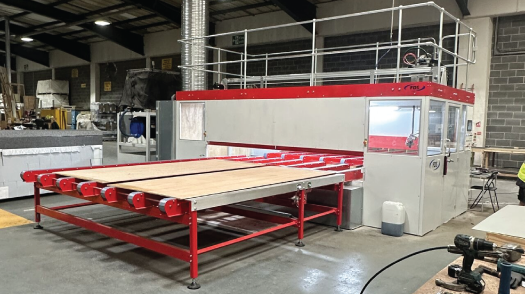
Modular construction changes the sequencing. While groundworks are progressing on site, the building itself is being manufactured in parallel. This overlap shortens the overall programme and reduces exposure to common delays.
Because modules are completed and quality checked before arriving on site, installation becomes a more predictable and efficient phase. For clients working to funding deadlines, academic terms, operational expansion plans, or revenue targets, that certainty has tangible value.
Greater confidence in costs
Cost volatility has become a significant concern across the industry. Material price fluctuations and labour pressures have made accurate forecasting more difficult in recent years.
Modular construction introduces discipline earlier in the process. Designs are typically fixed before manufacturing begins, which reduces the likelihood of late-stage changes. Factory production also improves efficiency, with tighter control over materials, waste, and productivity.
The result is a clearer understanding of costs from the outset and fewer unexpected increases during delivery. In a climate where financial scrutiny is high, that level of control matters.
Consistency in quality and performance
Quality in traditional construction can vary depending on site conditions and the coordination of multiple subcontractors. Modular construction benefits from repeatable processes carried out in controlled conditions.
Factory settings allow for structured quality checks at defined stages. Environmental factors such as moisture and temperature are managed. Components are built using consistent methods and standards.
This approach supports higher levels of build consistency, improved finishes, and strong thermal performance. Over the life of a building, this can translate into lower maintenance requirements and better operational efficiency.
Supporting sustainability goals
Sustainability is no longer a secondary consideration. It is central to procurement decisions and long-term asset management.
Modular construction can contribute positively in several ways. Factory production reduces material waste. Fewer deliveries are required to site. Shorter build programmes mean less on-site energy use and disruption.
Modules can also be designed to achieve high levels of energy performance, supporting lower operational carbon over the building’s lifetime.
For organisations looking ahead to 2026 and beyond, this alignment between construction method and environmental responsibility is increasingly important.
Reduced disruption on live sites
Many projects now take place in environments that cannot afford extended disruption. Schools must remain open. Healthcare facilities must continue to operate. Commercial organisations cannot pause activity for months at a time.
Because much of the construction work happens off site, modular significantly reduces on-site duration and activity. Installation periods are shorter, with fewer trades and less congestion.
This makes modular particularly well suited to sensitive or operational settings where continuity is essential.
A more resilient model for a changing industry
The industry continues to face structural challenges, from skills shortages to supply chain instability. Modular construction offers a more controlled and repeatable model of delivery.
By centralising production and standardising processes, it reduces dependency on large numbers of site-based trades and unpredictable conditions. That resilience is likely to become an increasingly important factor in procurement decisions as we move into 2026.
Looking ahead
Modular construction is not simply a different way of building. It is a response to the demands shaping the future of construction.
It offers faster delivery without sacrificing quality. It provides stronger cost control in an uncertain market. It supports sustainability objectives while reducing disruption on site.
As clients look towards 2026, the question is shifting from whether modular is viable to whether traditional methods can offer the same level of certainty.
For organisations seeking control, predictability, and long-term performance, modular is fast becoming the smarter choice.
Speak to Springfield to understand how a modular built approach could help benefit your business.


