




Contact our friendly team for more information on our full range of buildings and how to start the process of hiring or buying a modular building for your business. Our expert team is always available to give advice, guidance or support.
Published: 14 January 2026 in Help & Advice
How Off-Site Manufacture Reduces Project Risk
Construction projects carry risk by default. Timelines shift, costs creep, and site conditions introduce uncertainty that is difficult to control once work is underway. For developers, local authorities, and commercial clients, these risks often translate into delayed occupancy, budget overruns, and operational disruption.
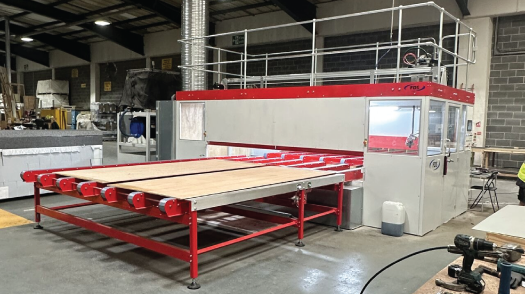
Off-site manufacture addresses many of these issues for Modular Buildings by changing where and how buildings are made. By moving the majority of construction activity into a controlled factory environment, project risk is reduced at multiple stages of delivery.
This article explains how off-site manufacture reduces risk across programme, cost, quality, and site impact, compared to traditional construction methods.
What is off-site manufacture in construction?
Off-site manufacture is a construction approach where building components or complete modules are produced in a factory rather than assembled entirely on site. These modules are then transported to site and installed onto prepared foundations.
The key difference is sequencing. Design is completed earlier, manufacturing happens in parallel with groundworks, and site installation becomes a shorter, more predictable phase.
This shift in process has a direct impact on risk.
How off-site manufacture reduces programme risk
One of the biggest risks in traditional construction is time uncertainty. Weather delays, labour availability, and trade coordination can all disrupt schedules. Off-site manufacture reduces programme risk in several ways.
First, factory production is not affected by weather. Manufacturing continues regardless of site conditions, which removes a common cause of delay.
Second, parallel working shortens the critical path. While groundworks and enabling works are underway on site, the building itself is being manufactured at the same time. This overlap is difficult to achieve with traditional methods.
Third, installation is faster and more predictable. Modules arrive finished, tested, and ready to install. This reduces dependency on multiple trades working sequentially on site.
As a result, project timelines are easier to plan, easier to communicate, and easier to maintain.
How off-site manufacture reduces cost risk
Cost overruns are often linked to late changes, inefficiencies, and unforeseen site conditions. Off-site manufacture reduces cost risk by introducing certainty earlier in the project lifecycle. Design is finalised sooner because manufacturing requires detailed coordination before production starts. This reduces the likelihood of late design changes, which are a major driver of additional cost.
Factory production also improves efficiency. Materials are ordered in bulk, waste is reduced, and labour is used more productively. These efficiencies are reflected in more stable pricing.
Because the build process is repeatable and measured, cost forecasting is more accurate. Clients benefit from clearer budgets with fewer variables that can escalate during construction.
How off-site manufacture improves quality and reduces defects
Quality issues create risk through rework, delays, and long-term maintenance problems. In a traditional factory environment, quality control is systematic rather than reactive.
Components are built using consistent processes, fixed jigs, and controlled conditions. Inspections happen at defined stages, rather than relying on checks once work is already concealed on site.
This leads to fewer defects, better finishes, and improved performance in areas such as thermal efficiency and airtightness.
Higher build quality reduces risk after handover, including call-backs, remedial works, and operational disruption for building users.
How off-site manufacture reduces on-site disruption and safety risk
Traditional construction sites are complex, busy environments with multiple trades operating simultaneously. This increases the risk of accidents, delays, and disruption to surrounding areas. Off-site manufacture reduces on-site activity significantly.
With most construction completed in the factory, site works focus on foundations, cranage, and final connections. This shorter site phase reduces noise, traffic movements, and congestion.
Fewer people on site also improves safety. Reduced working at height, less manual handling, and shorter programme durations all contribute to lower health and safety risk.
For occupied or sensitive sites, such as schools, healthcare settings, or live commercial environments, this reduction in disruption is particularly valuable.
How off-site manufacture supports risk management and governance
From a client and stakeholder perspective, risk is also about governance, reporting, and accountability. Off-site manufacture supports stronger risk management because progress is measurable and visible. Factory production can be tracked against schedules, with clear milestones and outputs.
This transparency makes it easier to identify issues early and address them before they affect the overall programme.
For public sector and regulated projects, this level of control supports compliance, audit requirements, and stakeholder confidence.
Why off-site manufacture changes the risk profile of a project
Off-site manufacture does not remove all risk from construction. Ground conditions, planning processes, and external factors still matter.
What it does is shift risk from unpredictable site-based activity to controlled, repeatable processes. That shift makes risk easier to manage, easier to price, and easier to mitigate.
For clients seeking certainty in delivery, cost, and quality, off-site manufacture offers a fundamentally different risk profile to traditional construction.
Key Takeaway
Off-site manufacture reduces project risk by controlling variables that typically cause delay, overspend, and disruption. By building in an off-site factory, projects benefit from predictable timelines, stable costs, higher quality, and safer, quieter sites.
As demand grows for faster, more reliable construction, off-site manufacture is becoming less of an alternative and more of a strategic choice for risk-aware clients.
If you are planning a project where certainty on time, cost, and site impact matters, off-site manufacture offers a lower-risk route to delivery. Speak to Springfield to understand how a factory-built approach could reduce risk on your next build.


