




Contact our friendly team for more information on our full range of buildings and how to start the process of hiring or buying a modular building for your business. Our expert team is always available to give advice, guidance or support.
Published: 16 September 2026 in Sectors
Planning School Space for the Year Ahead? Where Modular Buildings Fit In
As the new academic year is underway, schools have a much clearer picture of how well their existing space is working. Classrooms may be approaching capacity, specialist provision might need dedicated facilities, or rooms may be serving purposes they were never originally designed for.
This makes autumn a useful time to review the school estate and start planning for the year ahead.
Modular school buildings provide a practical way to create additional teaching, SEND, staff and specialist spaces. By manufacturing much of the building off site, schools can also reduce the amount of construction activity taking place within an operational education environment.
For schools considering their next estate project, the starting point should be understanding where space is under pressure and what pupils and staff will need from it in the future.
What can modular school buildings be used for?
Modular school buildings can be designed for classrooms, SEND provision, staff facilities, offices, dining spaces, changing rooms and other educational uses.
Rather than providing a standard building that the school then has to adapt, a modular project can be designed around its intended purpose from the outset.
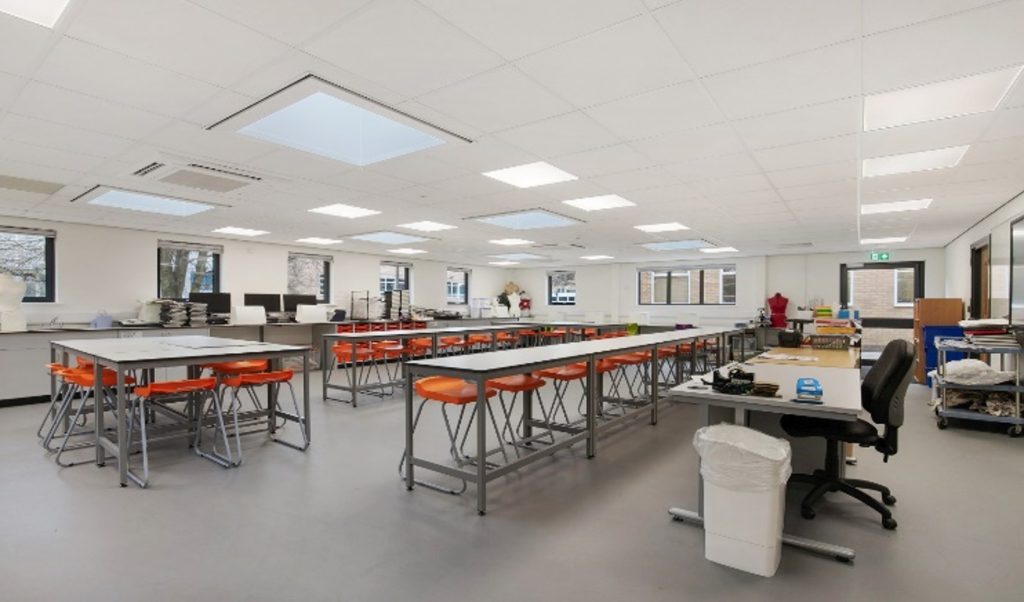
For a classroom, this might mean considering layout, storage, acoustics and natural light. A specialist teaching building may require smaller rooms or breakout areas, while staff and administrative facilities will have entirely different requirements.
This gives schools the opportunity to think about what is currently missing from their estate and create space specifically around that need.
How can schools make better use of their existing space?
Creating additional capacity does not always mean simply adding more classrooms. Looking at how existing rooms are being used can reveal opportunities to make the whole school estate work more effectively.
A meeting room may have become an intervention space. A classroom might be divided between activities that would work better in dedicated environments. Staff facilities could have been reduced over time to accommodate growing teaching requirements.
Adding a purpose-designed modular building can help address these pressures. For example, moving staff or administrative facilities into a new modular building could release space elsewhere for teaching. Alternatively, creating dedicated specialist facilities could return existing classrooms to their original purpose.
The aim is to consider the school estate as a whole rather than treating additional floor space as the only solution.
Can modular buildings provide SEND facilities?
Modular buildings can be purpose-designed to provide SEND classrooms and specialist spaces based on the needs of the pupils who will use them.
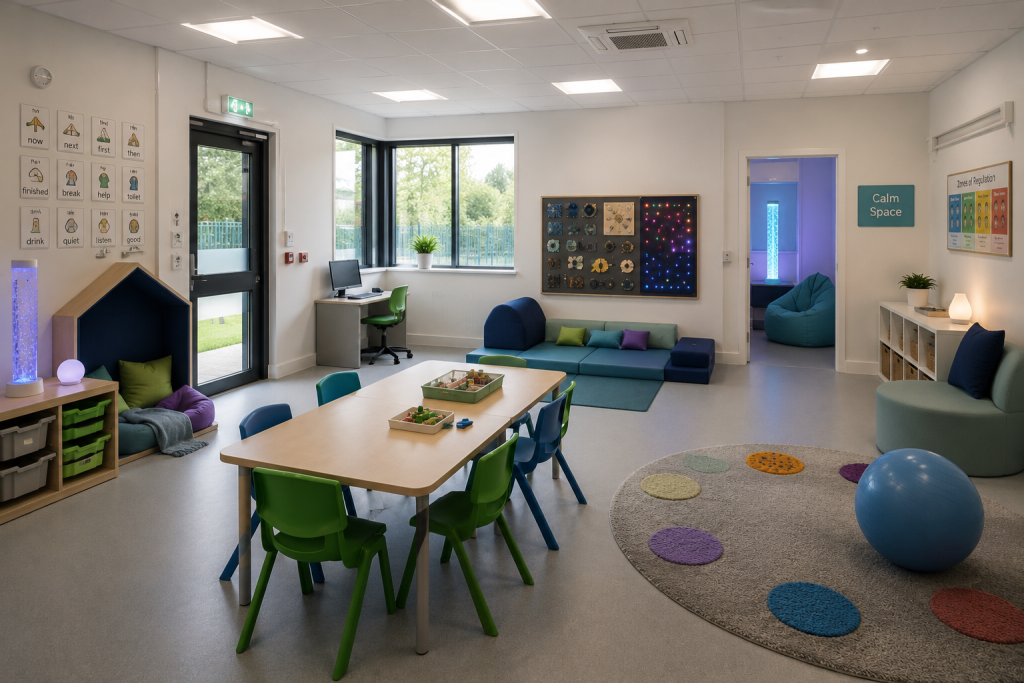
The physical environment can play an important role in SEND provision. Some pupils may benefit from quieter areas, smaller teaching rooms, sensory spaces or opportunities to move away from a larger classroom environment.
Trying to introduce these facilities into an existing building can be challenging when the available rooms were designed for conventional classroom use.
With a modular building, these requirements can inform the layout from the beginning. Designs can incorporate accessible facilities, breakout areas, sensory environments and different types of teaching space within the same building.
This allows the building to be planned around its intended educational use rather than adapting an unsuitable space afterwards.
How can modular construction reduce disruption to schools?
Modular construction can reduce disruption because much of the building is manufactured away from the school before being transported to site for installation.
Construction projects on operational school sites require particularly careful management. Deliveries, noise, site access and contractor movements all need to be considered alongside safeguarding and the normal school day.
Moving a significant proportion of construction into a controlled factory environment reduces the amount of building activity required at the school itself.
Manufacturing can also take place while foundations and other preparation work progress on site. Once the modules are ready, they are transported to the school for installation and completion.
This approach can shorten the period of intensive activity on site and help schools plan construction around their operational requirements.
Can modular school buildings be installed during the holidays?
School holidays can provide useful opportunities for elements of modular building installation, although the programme required will depend on the individual project.
The advantage comes from planning early. Identifying requirements during the academic year gives schools more time to develop the design, arrange the necessary approvals and prepare the site ahead of the preferred construction period.
The summer holidays are an obvious opportunity for works that would otherwise cause disruption, but they should not be the point at which planning begins.
Starting the process earlier gives schools and project teams more opportunity to coordinate activity around term dates and identify the most appropriate programme for the site.
How should schools plan for future space requirements?
Schools should consider expected pupil numbers, curriculum requirements, SEND provision and the condition and suitability of their existing estate when planning future space. The immediate problem may be a lack of classroom capacity, but the underlying requirement could be more complex.
Understanding how different spaces are being used can help identify where investment will have the greatest effect. Schools can then consider the purpose, location and specification of any additional accommodation rather than simply focusing on its size.
Planning ahead also allows future requirements to influence decisions made today. A modular project can be designed around the school’s current needs while considering how those needs may change over the life of the building.
Planning school space for the year ahead
The first few months of an academic year can reveal a great deal about how effectively a school estate is working.
It may become clear that additional teaching capacity is needed, that SEND provision would benefit from dedicated facilities, or that existing spaces could be used more effectively if certain functions were moved elsewhere.
Modular construction gives schools another way to respond to these requirements. Purpose-designed buildings can provide high-quality educational environments while off-site manufacture helps reduce the amount of construction taking place within the school grounds.
Planning early also gives schools more control over the process, allowing design and construction activity to be considered alongside the academic calendar rather than waiting until additional space becomes urgent.
Frequently asked questions about modular school buildings
Are modular buildings suitable for permanent school use?
Modular construction can be used to create permanent educational buildings. The specification, design and regulatory requirements will depend on the individual project and its intended use.
What types of school facilities can be built using modular construction?
Modular construction can be used for classrooms, SEND and specialist teaching spaces, staff facilities, offices, dining areas, changing facilities and other accommodation required across a school estate.
Can a modular classroom be designed for SEND pupils?
Yes. A modular building can be designed specifically around SEND provision, including features such as smaller teaching rooms, quiet spaces, sensory environments, breakout areas and accessible facilities where required.
Why is off-site construction useful for operational schools?
Manufacturing much of the building away from the school reduces the amount of construction activity required on site. This can help limit disruption and make it easier to coordinate works around pupils, staff and the academic calendar.
Start planning your school space
If you are reviewing your school estate and considering additional classrooms, SEND provision or specialist facilities for the year ahead, speak to Springfield about how modular construction could help you create space designed around the needs of your pupils and staff.


