




Contact our friendly team for more information on our full range of buildings and how to start the process of hiring or buying a modular building for your business. Our expert team is always available to give advice, guidance or support.
Published: 19 June 2026 in Help & Advice
Modular Building Compliance and Safety Standards in 2026: What Clients Need to Know

When considering a modular building project, compliance and safety are often among the first questions clients ask.
There is still a misconception that modular buildings are somehow different from traditional buildings when it comes to regulations. In reality, modular buildings must meet the same legal requirements, safety standards, and performance expectations as any other permanent structure.
As regulations continue to evolve in 2026, understanding how compliance is achieved through modern modular construction can provide reassurance and help clients make informed decisions.
Modular buildings must meet the same regulations as traditional buildings
One of the most common myths surrounding modular construction is that it operates under a separate set of rules.
In reality, permanent modular buildings are subject to the same Building Regulations as traditionally constructed buildings. This includes requirements relating to structural integrity, fire safety, accessibility, energy performance, ventilation, acoustics, and occupant wellbeing.
The difference is not in the standards that must be achieved. The difference lies in how the building is delivered.
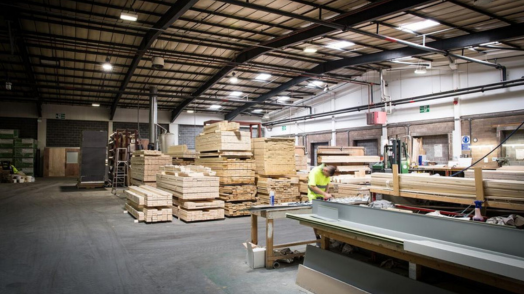
Because much of the construction takes place within a controlled factory environment, compliance can often be monitored and verified more consistently throughout the build process.
Fire safety remains a key priority
Since the introduction of enhanced building safety measures across the UK construction sector, fire safety has become an increasingly important consideration for clients and developers.
Modern modular buildings are designed and manufactured with fire performance requirements in mind from the earliest design stages.
Materials, compartmentation strategies, escape routes, and fire-resistant elements are all incorporated into the design process to ensure the completed building meets applicable regulatory requirements.
By integrating these considerations early, potential issues can often be identified and resolved before modules leave the factory.
Quality assurance starts before installation
In traditional construction, quality inspections often take place as work progresses on site.
With modular construction, quality assurance begins during manufacture.
Each module passes through a series of production and inspection stages before being transported to site. This structured process allows checks to be carried out in a controlled environment where conditions are consistent and documentation can be maintained throughout the project.
This approach supports greater traceability and provides confidence that standards are being achieved before installation begins.
Energy efficiency requirements continue to evolve
As sustainability targets become increasingly important, compliance is no longer limited to structural and safety requirements.
Energy performance standards continue to influence building design across all sectors.
Modular construction is particularly well suited to delivering high levels of thermal performance because components are manufactured with precision. This helps improve insulation continuity, reduce air leakage, and support energy-efficient operation throughout the building’s lifespan.
For clients, this can contribute towards lower operating costs and support wider environmental objectives.
Accessibility is built into the design process
Creating inclusive environments is a fundamental requirement for modern buildings.
Modular buildings are designed to accommodate accessibility requirements from the outset, helping ensure users can access and move through spaces safely and comfortably.
By incorporating accessibility considerations during the design phase, projects can avoid costly modifications later in the process while supporting a better experience for building occupants.
Why compliance and modular construction work well together
Compliance is often easier to manage when processes are controlled, repeatable, and documented.
That is one of the key advantages of modular construction.
Factory-based manufacture allows quality checks, testing, and inspections to be integrated throughout production rather than relying solely on site-based verification. Combined with detailed design coordination and rigorous project management, this creates a clear and structured pathway to compliance.
For clients, this means greater confidence that safety, quality, and regulatory requirements are being addressed at every stage of the project.
Looking ahead
As the construction industry continues to adapt to new regulations, sustainability goals, and safety expectations, compliance will remain a critical factor in project success.
Modular construction is well positioned to meet these challenges through controlled manufacturing, consistent quality assurance, and a design-led approach to safety and performance.
For organisations planning projects in 2026, choosing an experienced modular construction partner can help ensure that compliance is not treated as a final hurdle, but as an integral part of the entire delivery process.


